
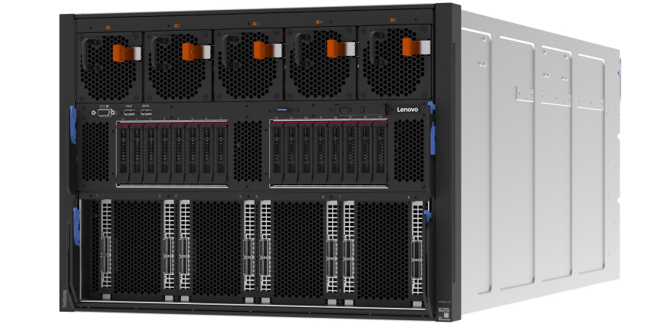
Lenovo Launches AI Servers with AMD MI300X GPUs
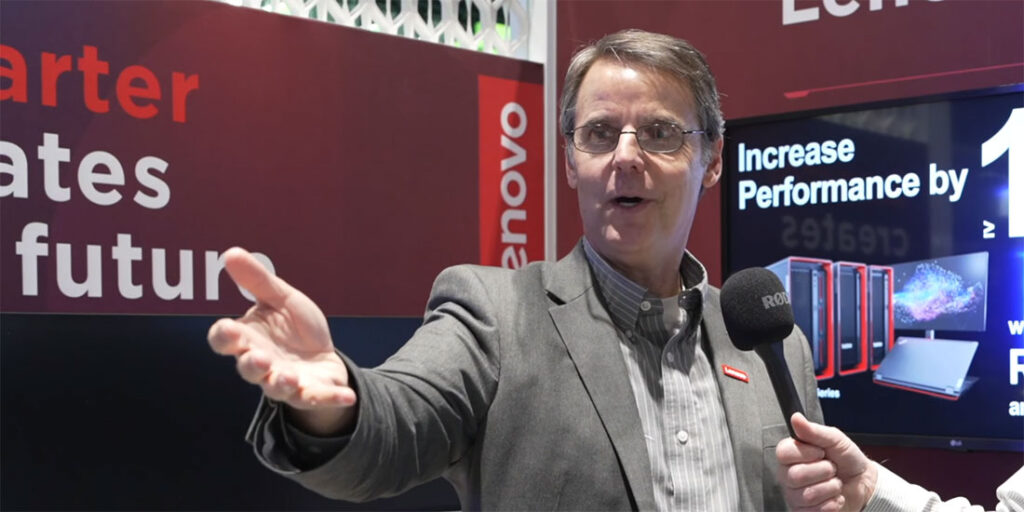
Lenovo today announced AI-centric infrastructure systems in collaboration with AMD, including the ThinkSystem SR685a V3 8GPU server (pictured here), designed for demanding AI workloads, including genAI and large language models. The server, powered by 4th Generation AMD EPYC Genoa CPUs and AMD Instinct MI300X GPUs, are designed for on-prem and AI cloud….
NVIDIA to Acquire Run:ai GPU Orchestration Software Vendor
Nvidia today announced it has agreed to acquire Run:ai, a Kubernetes-based workload management and orchestration software provider. Terms were not released but TechCrunch reported the price of the acquisition was approximately $700 million, according to sources.

DOD to Leverage Intel Foundry’s Advanced Process Technology
DOD has awarded Phase Three of its Rapid Assured Microelectronics Prototypes – Commercial program to Intel Foundry. This means RAMP-C customers can manufacture prototypes on Intel 18A, the company’s most advanced process technology. Although Intel and DOD did not disclose the dollar….

HPC News Bytes 20240422: New HPC Installs, the State of AI, Bitcoin Halving, Argonne-UICs’ Crabtree Institute
A good spring moring to you! Here’s a rapid (6:09) route through recent news from HPC-AI, including: new supercomputers installed at Los Alamos and France-CEA, Stanford AI Index Report released on the state of AI….
Sponsored Guest Article
Lenovo Maximizes HPC Resources via Partnership with SchedMD and Slurm Workload Manager
[SPONSORED GUEST ARTICLE] In HPC, leveraging compute resources to the maximum is a constant goal and a constant source of pressure. The higher the usage rate, the more jobs get done, the less resources sit idle, the greater the return on the HPC investment. At Lenovo, with its….
@HPCpodcast
-
HPC News Bytes 20240422: New HPC Installs, the State of AI, Bitcoin Halving, Argonne-UICs’ Crabtree Institute
A good spring moring to you! Here’s a rapid (6:09) route through recent news from HPC-AI, including: new supercomputers installed at Los Alamos and France-CEA, Stanford AI Index Report released on the state of AI….

HPC News Bytes 20240415: Intel Gaudi 3, Meta’s MTIA Chip, Easing GPU Shortages, AI Category Theory, China’s Growth Strategy
Happy Tax Day to you! Here’s a quck (6:23) romp through recent news from the world of HPC-AI, including: Intel’s Gaudi 3 GPU and Xeon-6 CPU, Meta’s new accelerator chip, GPU shortage easing….
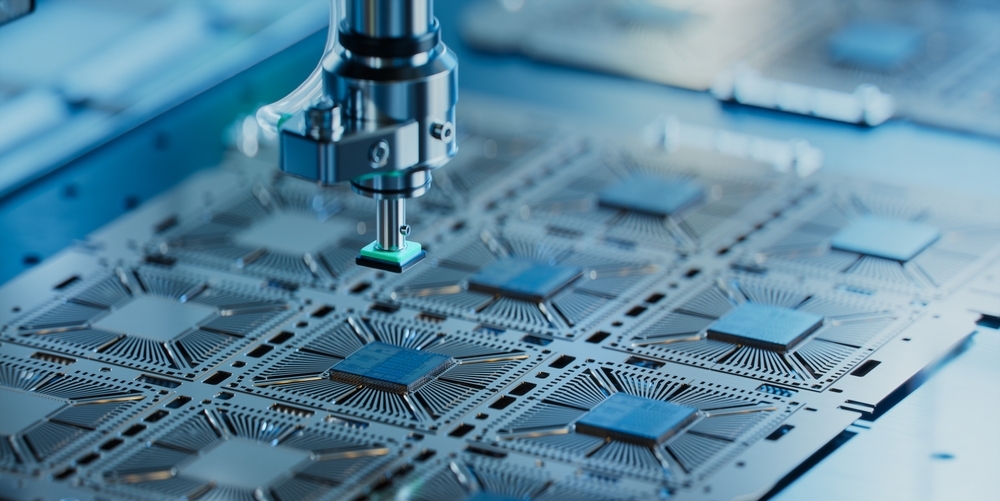
HPC News Bytes 20240408: Chips Ahoy! …and Quantum Error Rate Progress
A good April morning to you! Chips dominate the HPC-AI news landscape, which has become something of an industry commonplace of late, including: TSMC’s Arizona fab on schedule, the Dutch government makes a pitch to ASML, Intel foundry business’s losses, TSMC expands CoWoS capacity, SK hynix to investing in Indiana and Purdue, Quantinuum and Microsoft report 14,000 error-free instances
White Papers
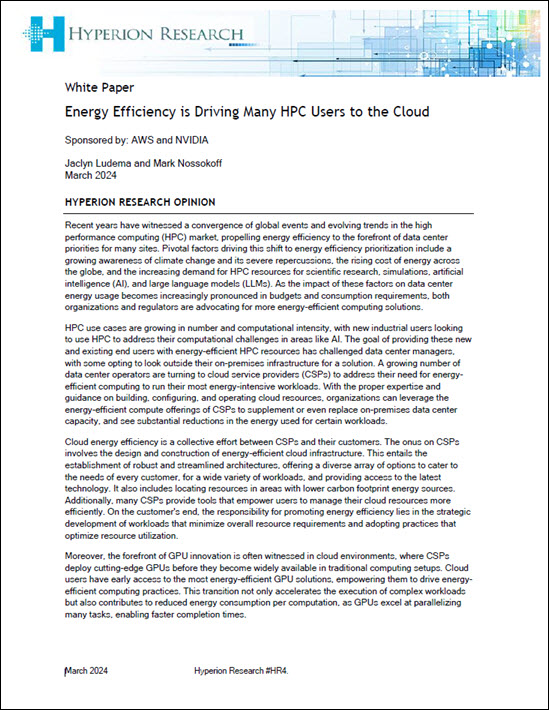
Energy efficiency drives HPC to the cloud
The high-performance computing (HPC) market is witnessing a notable shift towards the cloud, partially driven by the benefits of enhanced energy efficiency. According to Hyperion Research nearly every organization running HPC workloads is either already using or investigating the cloud to accelerate application performance, with the cloud market for HPC workloads forecast to reach $11.5 […]
Accelerate Large FEA Simulations by 10 with Ansys Mechanical on Ansys Gateway powered by AWS
Product development teams are increasingly leveraging cloud computing for complex engineering simulations. Ansys Mechanical users can now amplify these benefits with Ansys Gateway powered by AWS, customizing cloud settings for various solvers and analysis types. Ansys’ study shows up to 10x faster solution times for simulations exceeding 60 million DOF, compared to average workstations. Download […]
Faster CFD Solution Times via the Cloud: The Power of Ansys Fluent and Ansys Gateway powered by AWS
A new study reveals that, for a complex CFD problem solved using Ansys Fluent, an optimized cloud setting results in accelerated solution runtimes. To optimize results for users, Ansys Gateway powered by AWS has preconfigured Fluent settings that enable customers to get the best performance right out of the box. Download this white paper to […]
Videos from GTC 2024 and SC23
At GTC 2024: Liqid UltraStack Servers with up to 20 NVIDIA GPUs
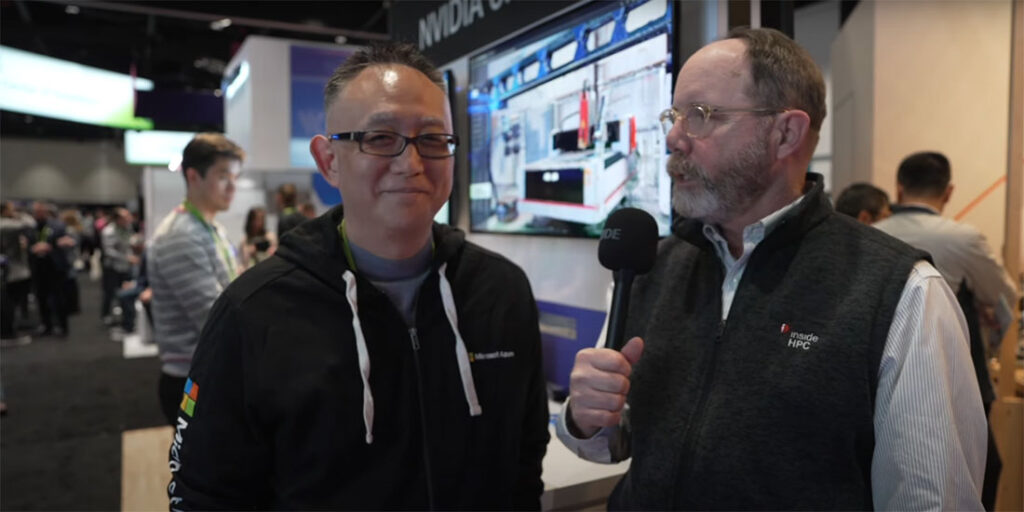

At SC23: Achronix Talks Turnkey FPGA Solutions for Generative AI


At SC23: Cristin Merritt Talks Women in HPC’s Inclusivity Mission

At SC23: CGG Talks its New ‘Outcome-as-a-Service’ for HPC and AI
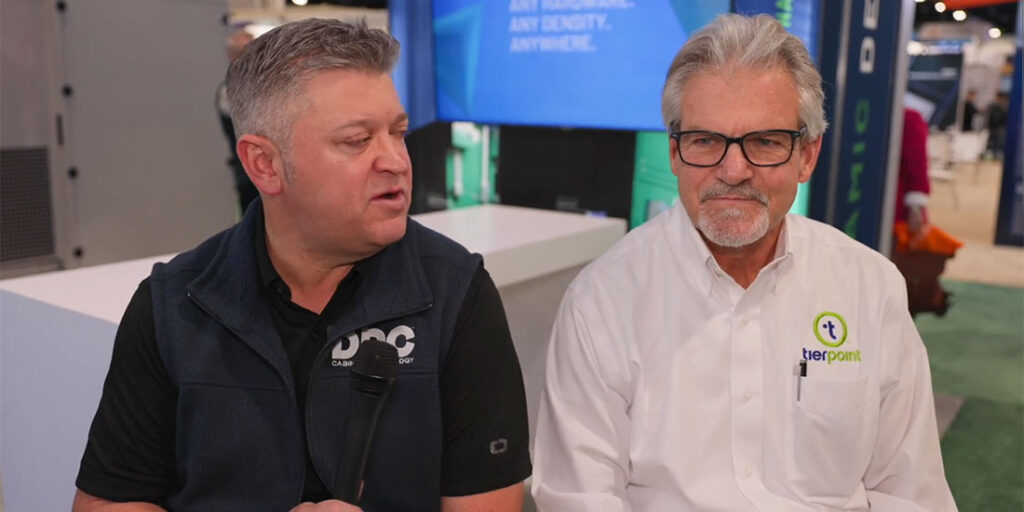
At SC23: DDC and TierPoint Talk ‘Liquid-Air Cooling’ Data Center Cabinets for HPC-AI
Editor’s Choice

Eviden: No Impact from Atos’s Financial Difficulties – ‘We Are Growing and Hiring’
We spoke with Eviden’s Group Senior Vice President, Head of Advanced Computing, HPC, Quantum, AI Solutions Emmanuel Le Roux, who asserted that Atos’ financial troubles have had no impact on Eviden, that Eviden is winning deals, growing and hiring.

A New Day for the TOP500: Aurora No. 2 at 585 PFlops, 4 New Top 10 Entrants, Frontier Still No. 1
Denver — Attendees at the SC23 conference here in Denver have been greeted by a roiled TOP500 ranking of the world’s most powerful supercomputers, along with significant news about a would-be exascale HPC system coming in at no. 2 on the list….
Aurora Exascale Install Update: Cautious Optimism
The twice-annual TOP500 list of the world’s most powerful supercomputers is not universally loved, arguments persist whether the LINPACK benchmark is an optimal way to assess HPC system performance. But few would argue it serves a valuable purpose: for those installing leadership-class supercomputers, the TOP500 poses a challenge and a looming deadline that “concentrates the mind wonderfully.”
Sponsored Guest Articles

Lenovo and NVIDIA at GTC 2024: An Alliance Enabling AI at Scale
[Sponsored Guest Article] The technology alliance between Lenovo and NVIDIA is one whose total is greater than the sum of its parts. NVIDIA processors are changing the world and Lenovo servers are the platforms in which world-changing compute is happening….

Hammerspace Unveils the Fastest File System in the World for Training Enterprise AI Models at Scale
[SPONSORED GUEST ARTICLE] Hammerspace, the company orchestrating the Next Data Cycle, unveiled the high-performance NAS architecture needed to address the requirements of broad-based enterprise AI….

Accelerated HPC for Energy Efficiency with AWS and NVIDIA
Many industries are starting to run HPC in the cloud. Find out how GPU-accelerated compute, from AWS and NVIDIA, is helping organizations run HPC workloads and AI/ML jobs faster, in a more energy-efficient way.