

Seongchan Kim from KISTI gave this talk at GTC 2019. “How do meteorologists predict weather or weather events such as hurricanes, typhoons, and heavy rain? Predicting weather events were done based on supercomputer (HPC) simulations using numerical models such as WRF, UM, and MPAS. But recently, many deep learning-based researches have been showing various kinds of outstanding results. We’ll introduce several case studies related to meteorological researches.”
Archives for March 2019
AFRL Unveils Sharable Classified Supercomputing Capability
March 31, 2019 by

The Air Force Research Laboratory has unveiled the first-ever shared classified Department of Defense high performance computing capability at the AFRL DOD Supercomputing Resource Center. “The ability to share supercomputers at higher classification levels will allow programs to get their supercomputing work done quickly while maintaining necessary security. Programs will not need to spend their budget and waste time constructing their own secure computer facilities, and buying and accrediting smaller computers for short-term work. This new capability will save billions for the DOD while providing additional access to state-of-the-art computing.”
The Power of Crunching Big Data Effectively
March 31, 2019 by

In this contributed article, Lex Boost, CEO of Leaseweb USA, points out that according to an Accenture study, 79% of enterprise executives agree that companies not embracing big data will lose their competitive edge. Considering that data creation is on track to grow 10-fold by 2025, it’s crucial for companies to be able to process it more quickly, and meaningfully.
Amazon Elastic Fabric Adapter: Anatomy, Capabilities, and the Road Ahead
March 30, 2019 by

Raghu Raja from Amazon gave this talk at the OpenFabrics Workshop in Austin. “Elastic Fabric Adapter (EFA) is the recently announced HPC networking offering from Amazon for EC2 instances. It allows applications such as MPI to communicate using the Scalable Reliable Datagram (SRD) protocol that provides connectionless and unordered messaging services directly in userspace, bypassing both the operating system kernel and the Virtual Machine hypervisor. This talk presents the designs, capabilities, and an early performance characterization of the userspace and kernel components of the EFA software stack.”
Job of the Week: Senior HPC Systems Engineer at Children’s Mercy Hospital
March 30, 2019 by

Children’s Mercy Hospital in Kansas City is seeking a Senior HPC Systems Engineer in our Job of the Week. “A Senior HPC Systems Engineer is responsible for the daily operation and monitoring of a high performance computing infrastructure, which includes the high performance compute cluster, storage system, and backup and disaster recovery systems. The engineer plans, designs, and implements the integration of HPC systems, and provides consultation and support for other HPC projects. They are expected to be a top-level contributor/specialist for high performance computing and Linux/UNIX environments.”
Act Early to Embrace 5G: Accelerate Returns Via Anomaly Detection
March 30, 2019 by

In this contributed article, Pratap Dangeti, Principal Data Scientist at CrunchMetrics, discusses anomaly detection on 5G and how it’s useful to leverage a combination of statistical methods and AI and ML-based algorithms to detect anomalies in your data and alert you in real time – so that you can take preventive action to avert business-critical issues and leverage profit-generating opportunities.
Inspur to Offer BeeGFS Storage Systems for HPC and AI Clusters
March 29, 2019 by

Today Inspur announced that it will offer integrated storage solutions with the BeeGFS filesystem. BeeGFS, a leading parallel cluster file system with a distributed metadata architecture, has gained global acclaim for its usability, scalability and powerful metadata processing functions. “BeeGFS has unique advantages in terms of usability, flexibility and performance,” said Liu Jun, General Manager of AI&HPC, Inspur. “It can easily adapt to the different business needs of HPC and AI users. The cooperation between Inspur and ThinkParQ will provide our HPC and AI cluster solutions users with an integrated BeeGFS system and a range of high-quality services, helping them to improve efficiency with BeeGFS.”
NVIDIA GPUs Speed Altair OptiStruct structural analysis up to 10x
March 29, 2019 by
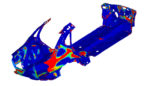
Last week at GTC, Altair announced that it has achieved up to 10x speedups with the Altair OptiStruct structural analysis solver on NVIDIA GPU-accelerated system architecture — with no compromise in accuracy. This speed boost has the potential to significantly impact industries including automotive, aerospace, industrial equipment, and electronics that frequently need to run large, high-fidelity simulations. “This breakthrough represents a significant opportunity for our customers to increase productivity and improve ROI with a high level of accuracy, much faster than was previously possible,” said Uwe Schramm, Altair’s chief technology officer for solvers and optimization. “By running our solvers on NVIDIA GPUs, we achieved formidable results that will give users a big advantage.”
Agenda Posted for MSST Mass Storage Conference in May
March 29, 2019 by

The Massive Storage Systems and Technology Conference (MSST) posted their preliminary speaker agenda. Keynote speakers include Margo Seltzer and Mark Kryder, along with a five-day agenda of invited and peer research talks and tutorials, May 20-24 in Santa Clara, California. “MSST 2019 will focus on current challenges and future trends in distributed storage system technologies,” said Meghan Wingate McClelland, Communications Chair of MSST.”
DataOps: The New DevOps of Analytics
March 29, 2019 by

In this contributed article, Farnaz Erfan, Senior Director and Head of Product Marketing at Paxata, discusses how DataOps represents a change in culture that focuses on improving collaboration and accelerating service delivery by adopting lean or iterative practices. Unlike its close cousin DevOps, which focuses on operations and development teams, DataOps is geared towards the data developers, data analysts or data scientists.