

In this edition of Let’s Talk Exascale, Christian Trott of Sandia National Laboratories shares insights about Kokkos, a programming model for numerous Exascale Computing Project applications. “Kokkos is a programming model being developed to deliver a widely usable alternative to programming in OpenMP. It is expected to be easier to use and provide a higher degree of performance portability, while integrating better into C++ codes.”
Archives for December 2019
SC19 Invited Talk: HPC Solutions for Geoscience Application on the Sunway Supercomputer
December 25, 2019 by

Lin Gan from Tsinghua University gave this invited talk at SC19. “In recent years, many complex and challenging numerical problems, in areas such as climate modeling and earthquake simulation, have been efficiently resolved on Sunway TaihuLight, and have been successfully scaled to over 10 million cores with inspiringly good performance. To carefully deal with different issues such as computing efficiency, data locality, and data movement, novel optimizing techniques from different levels are proposed, including some specific ones that fit well with the unique architectural futures of the system and significantly improve the performance.”
Introducing DataStax Luna, Enterprise Support for Apache Cassandra
December 25, 2019 by

DataStax announced DataStax Luna, subscription-based support for open source Cassandra. The new DataStax offering supports the fast growing adoption of Apache Cassandra™ by enterprises across every industry. According to the popular site DB-Engines, Cassandra is used by 40% of the Fortune 100 and continues to gain popularity.
Penguin Computing Upgrades Corona Cluster with 7nm AMD GPU Technology
December 24, 2019 by

Penguin Computing has upgraded the Corona supercomputer at LLNL with the newest AMD Radeon Instinct MI60 accelerators. Based on the Vega 7nm architecture, this upgrade is the latest example of Penguin Computing and LLNL’s ongoing collaboration aimed at providing additional capabilities to the LLNL user community. “With the MI60 upgrade, the cluster increases its potential PFLOPS peak performance to 9.45 petaFLOPS of FP32 peak performance. This brings significantly greater performance and AI capabilities to the research communities.”
“Above the Trend Line” – Your Industry Rumor Central for 12/24/2019
December 24, 2019 by

Above the Trend Line: your industry rumor central is a recurring feature of insideAI News. In this column, we present a variety of short time-critical news items grouped by category such as M&A activity, people movements, funding news, financial results, industry alignments, customer wins, rumors and general scuttlebutt floating around the big data, data science and machine learning industries including behind-the-scenes anecdotes and curious buzz.
Data Problems? Look at In-Memory Analytics First
December 24, 2019 by

In this special guest feature, Antoine Chambille, Global Head of Research & Development at ActiveViam, discusses how in-memory analytics is helping businesses solve their data challenges. In-memory analytics has quietly become a go-to solution for many businesses today where real-time decision-making is the norm — such as finance, retail or healthcare. Three main reasons have made in-memory analytics an increasingly popular solution across industries.
Sandia and LBNL to lead Quantum Information Edge Strategic Alliance
December 24, 2019 by

A nationwide alliance of national labs, universities, and industry launched today to advance the frontiers of quantum computing systems designed to solve urgent scientific challenges and maintain U.S. leadership in next-generation information technology. “The Quantum Information Edge will accelerate quantum R&D by simultaneously pursuing solutions across a broad range of science and technology areas, and integrating these efforts to build working quantum computing systems that benefit the nation and science.”
Video: Optimizing Flash at Scale at CEA
December 23, 2019 by

In this video from the DDN User Group at SC19, Gael Delbray from CEA presents: Optimizing Flash at Scale. “The major challenges that the HPC will face in the coming years are manifold, such as the development of hardware and software architectures able to deliver very high computing power, modelling methods combining different scales and physical models and the management of huge volumes of numerical data.”
XSEDE Supercomputers Advance Skin Cancer Research
December 23, 2019 by
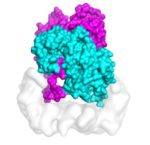
In this TACC podcast, UC Berkeley scientists describe how they are using powerful supercomputers to uncover the mechanism that activates cell mutations found in about 50 percent of melanomas. “The study’s computational challenges involved molecular dynamics simulations that modeled the protein at the atomic level, determining the forces of every atom on every other atom for a system of about 200,000 atoms at time steps of two femtoseconds.”
IBM Launches Quantum Computing Initiative for Japan
December 23, 2019 by

IBM and the University of Tokyo have announced an agreement to partner to advance quantum computing and make it practical for the benefit of industry, science and society. “Under the agreement, an IBM Q System One will be installed in an IBM facility in Japan. It will be the first installation of its kind in the region and only the third in the world following the United States and Germany. The Q System One will be used to advance research in quantum algorithms, applications and software, with the goal of developing the first practical applications of quantum computing.”