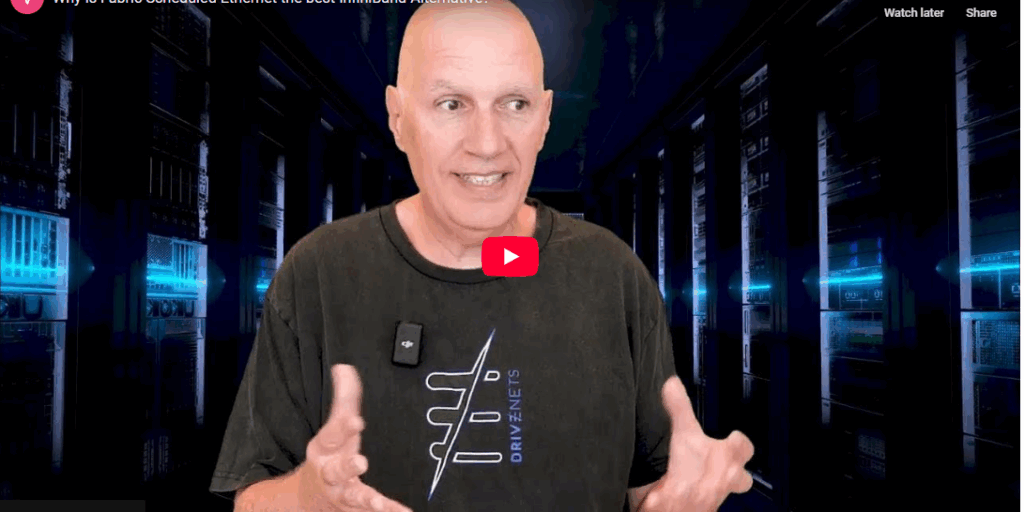

Shuquan Huang from 99Cloud gave this talk at the OpenStack Summit in Vancouver. “In this session, we will introduce OpenStack Acceleration Service – Cyborg, which provides a management framework for accelerator devices (e.g. FPGA, GPU, NVMe SSD). We will also discuss Rack Scale Design (RSD) technology and explain how physical hardware resources can be dynamically aggregated to meet the AI/HPC requirements.”
Video: Speed Your Code with Intel Parallel Studio XE
June 20, 2018 by

“Modern processors perform their best with parallel code that’s both vectorized and threaded, which can run more than 100 times faster more than serial code. So how can you accomplish this more easily through parallel programming? Enter Parallel Studio XE, a suite of tools that simplifies and speeds the design, building, tuning, and scaling of applications with the latest code modernization methods.”
Lenovo Moves Liquid Cooling Forward with Neptune
June 19, 2018 by

Today Lenovo released details its pending Neptune liquid-cooling systems, which will enable data centers to run “up to 50 percent more efficiently, with uncompromising performance while maintaining a dense footprint.” “In Roman mythology, Neptune used his three-pronged trident to tame the sea. This inspired Lenovo’s liquid cooling “trident” of cooling technologies: Direct to Node (DTN) warm water cooling, rear door heat exchanger, and hybrid solutions that combine both air and liquid cooling.”
Let’s Talk Exascale: Optimizing I/O at the ADIOS Project
June 18, 2018 by

In this episode of Let’s Talk Exascale, researchers from the ADIOS project describe how they are optimizing I/O on exascale architectures and making the code easily maintainable, sustainable, and extensible, while ensuring its performance and scalability. “The Adaptable I/O System (ADIOS) project in the ECP supports exascale applications by addressing their data management and in situ analysis needs.”
ARM goes Big: HPE Builds Petaflop Supercomputer for Sandia
June 18, 2018 by
Today HPE announced plans to deliver the world’s largest Arm supercomputer. As part of the Vanguard program, Astra, the new Arm-based system, will be used by the NNSA to run advanced modeling and simulation workloads for addressing areas such as national security, energy and science. “By introducing Arm processors with the HPE Apollo 70, a purpose-built HPC architecture, we are bringing powerful elements, like optimal memory performance and greater density, to supercomputers that existing technologies in the market cannot match,” said Mike Vildibill, vice president, Advanced Technologies Group, HPE.
Radio Free HPC Previews ISC Student Cluster Competition & Ancillary Events
June 18, 2018 by
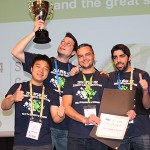
In this podcast, the Radio Free HPC team previews the ISC 2018 Student Cluster Competition. “Now in its seventh year, the Student Cluster Competition enables international STEM teams to take part in a real-time contest focused on advancing STEM disciplines and HPC skills development at ISC 2018 from June 25-27.”
Advanced Computing: HPC and RDS at University of Bristol
June 17, 2018 by

Simon Burbidge from the University of Bristol gave this talk at the HPC User Forum. “Our research focuses on the application of heterogeneous and many-core computing to solve large-scale scientific problems. Related research problems we are addressing include: performance portability across many-core devices; automatic optimization of many-core codes; communication-avoiding algorithms for massive scale systems; and fault tolerance software techniques for resiliency at scale.”
Wave Computing Acquires MIPS for AI on the Edge
June 17, 2018 by
AI startup Wave Computing announced this week that it has acquired MIPS. “The acquisition of MIPS allows us to combine technologies to create products that will deliver a single ‘Datacenter-to-Edge’ platform ideal for AI and deep learning. We’ve already received very strong and enthusiastic support from leading suppliers and strategic partners, as they affirm the value of data scientists being able to experiment, develop, test and deploy their neural networks on a common platform spanning to the Edge of Cloud.”
Intel to Showcase AI and HPC Demos at ISC 2018
June 16, 2018 by

Today Intel released a sneak peek at their plans for ISC 2018 in Frankfurt. The company will showcase how it’s helping AI developers, data scientists and HPC programmers transform industries by tapping into HPC to power the AI solutions. “ISC brings together academic and commercial disciplines to share knowledge in the field of high performance computing. Intel’s presence at the event will include keynotes, sessions, and booth demos that will be focused on the future of HPC technology, including Artificial Intelligence (AI) and visualization.”
Atos Quantum Learning Machine Comes to SURFsara in the Netherlands
June 15, 2018 by
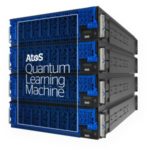
Dutch researchers have a new opportunity to experiment with Quantum Computing with the new Atos Quantum Learning Machine at SURFsara. The Atos Quantum Learning Machine is a complete on-premise quantum simulation environment designed for quantum software developers to generate quantum algorithms. It is dedicated to the development of quantum software, training and experimentation. The Atos Quantum Learning Machine allows researchers, engineers and students to develop and experiment with quantum software.